
Globe vs Ball vs Butterfly: Which Valve Should Throttle?
All three families can stop flow; only some can modulate it well. The choice between globe, ball and butterfly for control duty comes down to characteristic quality, pressure recovery, seat load and cost. Here is the comparison as it matters in practice.
1. The fundamental difference: how they modulate
- Globe (linear motion) — a plug moves perpendicular to the seat inside a caged trim. The cage windows shape the opening area, so the inherent characteristic is engineered — linear, equal percentage, or special (cavitation-control, low-noise). Rangeability 50:1 or better. This is the family purpose-built for throttling.
- Ball (quarter-turn) — a rotating sphere. A full-bore ball has almost no throttling ability (its capacity arrives in the first 15° of rotation); a characterized ball with V-notch or shaped edge approaches equal-percentage behaviour with moderate rangeability (~100:1 claimed, ~20:1 usable). Good for fibrous, dirty or viscous media.
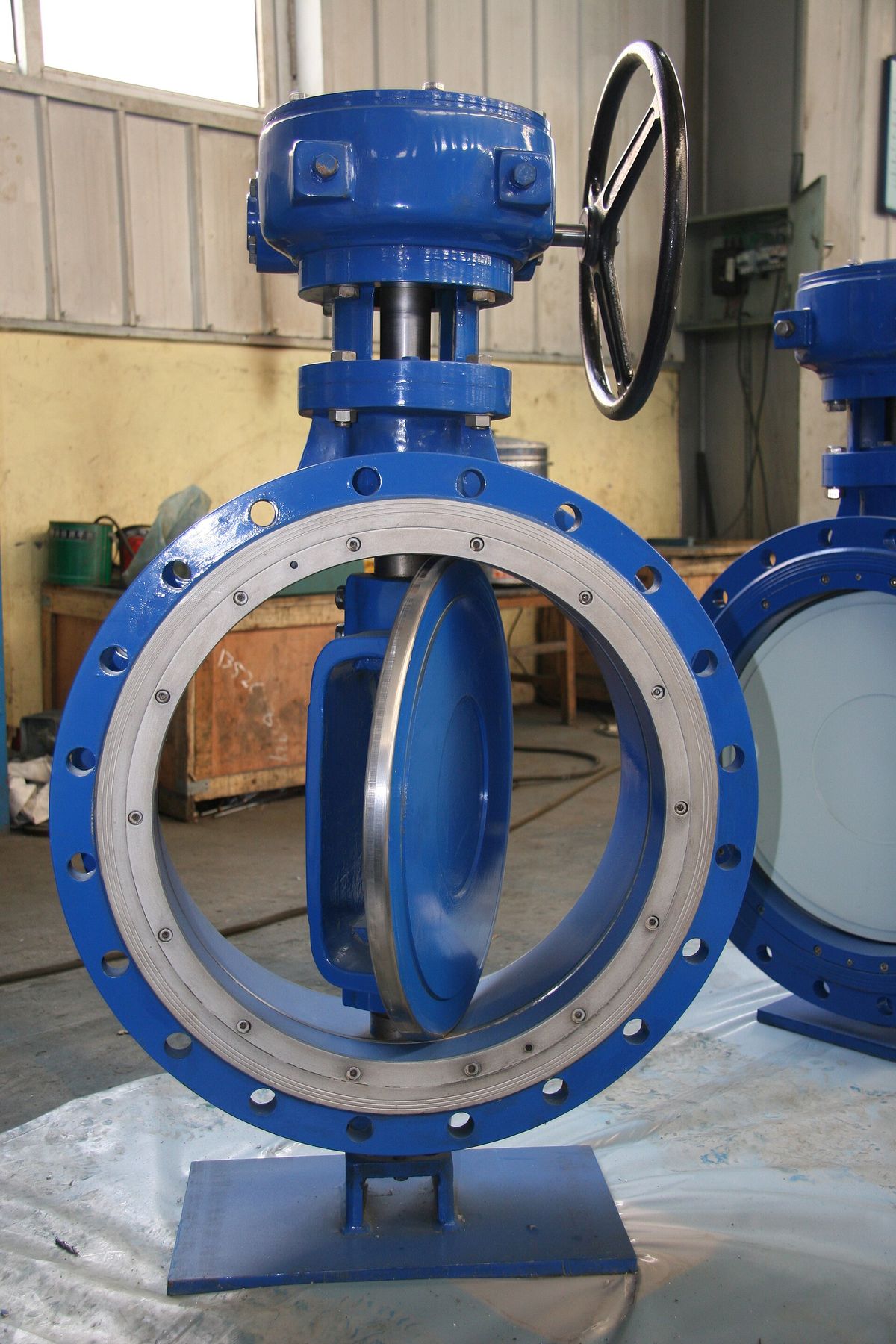
- Butterfly (quarter-turn) — a rotating disk. Conventional concentric designs are workable but coarse; high-performance eccentric disks with engineered torque characteristics throttle reasonably well, and large sizes are dramatically cheaper per Cv than globes.
2. Side-by-side
| Property | Globe | Characterized ball | Butterfly (HPE) |
|---|---|---|---|
| Throttling quality | Excellent — engineered characteristic | Good (V-notch), poor (full bore) | Fair to good |
| Usable rangeability | 50:1+ | 20:1 (V-notch) | ~15:1 |
| Pressure recovery | Low (FL 0.7–0.9) — gentler on cavitation | High — cavitation-prone at high drop | High — choking early |
| Shutoff class | IV (metal), VI (soft seat) | VI typical (soft seats) | IV–VI depending on design |
| High ΔP / severe service | Yes — multistage trims exist | Limited | Limited |
| Cost per size | Highest; grows fast above NPS 8–10 | Medium | Lowest in large sizes |
| Cavitation/noise solutions | Rich trim ecosystem | Limited | Limited |
3. The practical selection
- Severe service, high ΔP, noise/cavitation limits, tight control: globe, almost without debate. The trim ecosystem (staged cages, drilled-hole cavitation trims, Whisper-type low-noise designs) exists only in this family.
- Large diameter, moderate ΔP, cost-driven (water, HVAC, cooling): high-performance butterfly. A 24 in globe is a special procurement; a 24 in butterfly is catalog stock.
- Dirty, fibrous, viscous media; slurry-ish duties: characterized ball, or butterfly with appropriate seat.
- On-off service dressed as control: any of them — but if the loop genuinely modulates, do not install a full-bore ball "because it was cheaper". Its flow-vs-travel curve is a step function.
4. Two nuances worth knowing
- Recovery behaviour decides damage risk. Low-recovery globes take a big drop "gently"; high-recovery quarter-turns convert the same drop into more intense local cavitation. Same ΔP, different pain.
- Quarter-turn dynamics differ. Butterfly torque peaks mid-travel and seats with a slam; actuator sizing must follow the torque diagram, not the shutoff figure alone — see actuator selection.
Related reading: How a control valve works · flow characteristics compared · the manufacturer directory lists leading vendors in each family.
Editorial note. Comparisons reflect typical catalogue values for each family; individual designs vary widely. Verify against manufacturer data for the specific model. Engineering content is educational.