
Gas-Hydraulic (Gas-over-Oil) Actuators
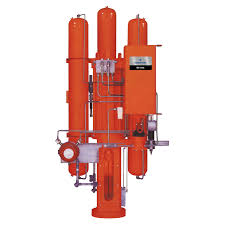
A gas-hydraulic actuator — usually “gas-over-oil” — uses the process gas itself as the power medium, but lets hydraulic fluid do the pushing. Gas pressure acts on a large piston above a fluid chamber; the displaced fluid drives the actuating piston. Because force is pressure × area, a large gas piston moving a small fluid piston multiplies effective pressure — enough thrust to shear-sever surface safety valves and pipeline duty where plant air does not exist.
How It Works
Line gas (or instrument gas) enters the upper chamber and presses on a large-area piston floating on hydraulic fluid. The fluid transfers that force to the actuating piston at intensified pressure. Porting gas to either side gives open and close strokes; a spring or fluid-side bias defines fail action.
- Intensification ratio — gas piston area / fluid piston area sets the multiplier
- Fluid system — the hydraulic circuit is sealed; verify level and cleanliness
- Fail action — spring-assisted or fluid-dumped; often fails closed to shear the well
- Hand-pump backup — manual stroking for commissioning and tests
- Sour-gas compatibility — seals and coatings must match the gas composition
- Fluid temperature — freezing condensate in the gas is a classic failure
Types & Variants
- Gas-over-oil linear — surface safety valves and gate valves
- Gas-over-oil quarter-turn — scotch yoke or vane driven by the fluid side
- Spring-return builds — inherent fail-safe on gas loss
- Hand-pump-equipped — local operation without gas supply
- High-pressure class — API 6A wellhead service ratings
- Piston-type direct gas — no fluid chamber for clean dry gas service
What to Compare Before You Buy
| Parameter | What it means | Why it matters |
|---|---|---|
| Available gas pressure | Minimum line or instrument gas pressure | Thrust math starts at the worst case — a falling well pressure shrinks thrust fast |
| Intensification ratio | Gas piston vs fluid piston areas | Decides whether the available gas can develop the seat-breaking thrust |
| Fail action & API class | Fail-closed shear, API 6A ratings | Surface safety duty is certified territory; match the well study |
| Fluid system design | Sealed volume, sight glass, fill port | Level loss = thrust loss; maintenance access matters |
| Hand pump & gauges | Manual backup and local pressure readout | Commissioning and testing without gas supply |
| Environment | Sour service, temperature, offshore coatings | NACE MR0175 and temperature class decide the materials |
Where It Is Used
Wellhead and pipeline territory — wherever gas is the only energy source and thrust is brutal:
- Surface safety valves (SSV) and wing valves on wellheads
- Pipeline mainline and sectionalising valves
- Compressor station ESD and recycle valves
- Remote pads with no instrument air and limited power
Common Brands
Field Problems & Fixes
| Symptom | Likely cause | Fix |
|---|---|---|
| Thrust collapsed / will not seat | Fluid level low — leakage from the sealed system | Top up per manual; trace and repair the leak path |
| Actuator freezes in cold weather | Condensate in the gas freezing the ports | Trace/dry gas supply; verify temperature class of the build |
| Slow stroke | Restricted gas supply or undersized tubing | Check supply path sizing; verify porting and vents |
| Gas leaking at seals | Sour-service seal degradation | Replace with NACE-compatible seal kits |
| Hand pump will not build pressure | Check-valve seats or air in the fluid circuit | Service the hand pump; bleed the hydraulic circuit |